
Album value
Nick Drake — Bryter Layter.
First-press value.
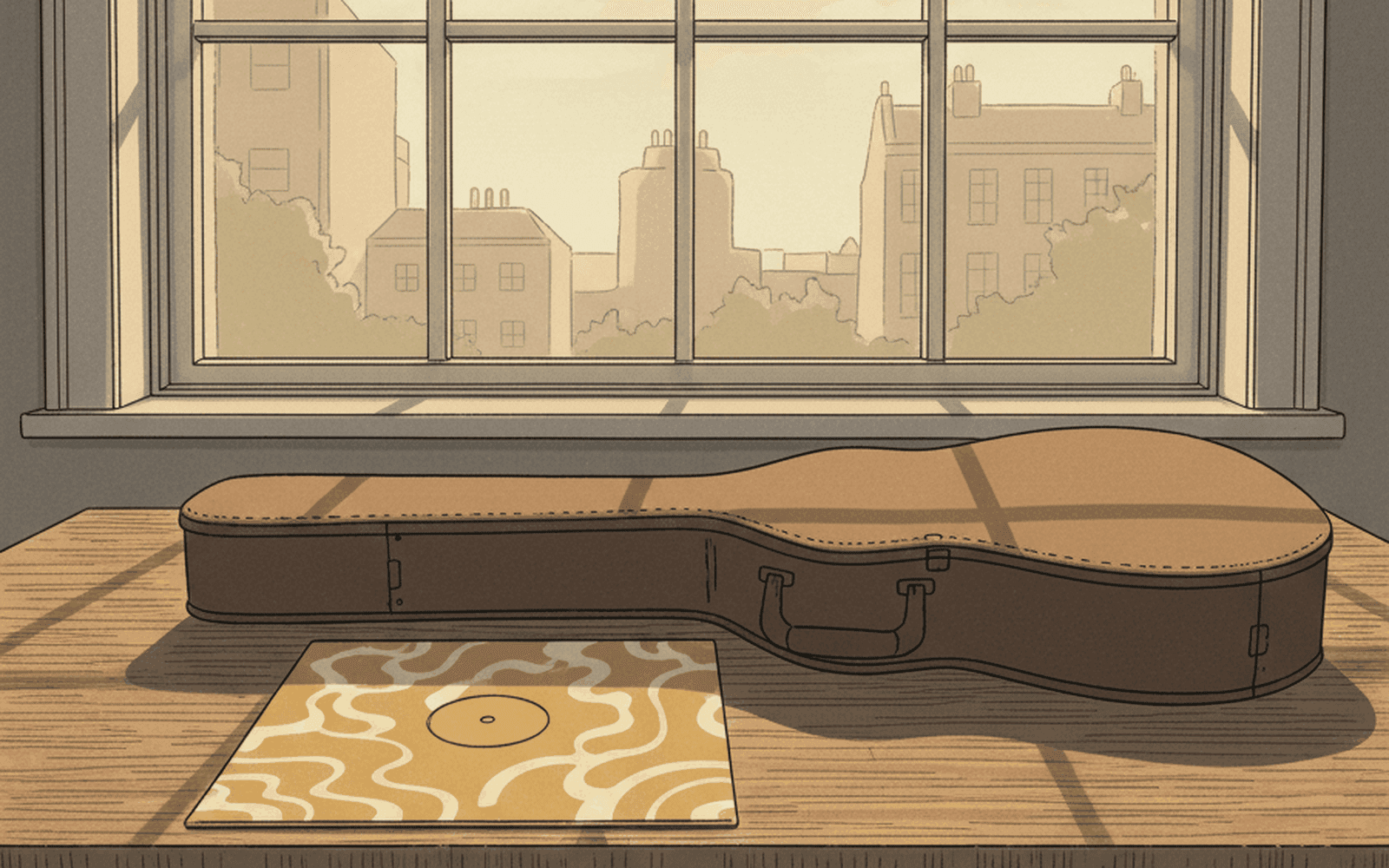
Drake's second album carries '℗ 1970' on the label, but Island held it back from November 1970 and released it in the UK on 5 March 1971. The UK first pressing is on the pink-rim 'palm tree' label in a textured sleeve. A 1972 repress used the same A-1U/B-1U stampers and the same sleeve, so the label text is what separates a $500 copy from a $240 one. In the US it first appeared on Antilles in the late 1970s.
01
The first-press, by the numbers
Released 1971. The UK first-press shipped on the Island pink-rim 'palm tree' label.
- UK stereo catalog: ILPS 9134
- First US issue: Antilles AN 7028 (1977)
The center label is only the first clue. See the full Island pink label identification guide.
Compare this copy with the artist's other collectible originals. See the Nick Drake vinyl value profile.
02
How to confirm a first-press
Three things separate an original from a later reissue beyond the catalog number.
- First-pressing labels show track times without brackets, Joe Boyd's production credit on one line, 'ILPS 9134' with no hyphen, '℗ 1970' with no 'Island Records Ltd.', and 'Side 1' and 'Stereo' printed
- The 1972 UK repress keeps the A-1U/B-1U runouts and textured cover but adds 'Island Records Ltd.' after ℗ 1970, puts times in brackets and drops 'Stereo'. Discogs median about $240, against about $508 for the first pressing
- The original textured sleeve is printed by the E. J. Day Group and misprints the arranger credit as 'All bass and string arrangements by Robert Kirby'
- US copies start with Antilles AN 7028 (1977 Terre Haute; a 1976 test pressing exists). Discogs median about $99; the 1978 Keel pressing sells for about $75
The matrix runout etched in the dead wax is the definitive identifier when label and catalog number both look era-correct.
03
What it's worth
Recent sold-listing ranges. Pressing, condition, and current market all move the number.
| Pressing & condition | Recent sold |
|---|---|
| 1971 first-press (NM) | $700–$2,000 |
| 1971 first-press (VG+) | $250–$550 |
| Reissue (any later catalog), NM | $20–$100 |
What pushes to the top: First-issue labels (times without brackets, ℗ 1970 only) on a quiet record in a clean textured E. J. Day sleeve.
Sources: Discogs sold listings (90-day window), Popsike.com auction archive, Goldmine Record Album Price Guide.
04
If you have one
Pull the record. Check the label first against the Island pink-rim 'palm tree' design. Confirm the catalog number on the label matches ILPS 9134. Then check the matrix runout in the dead wax. All three lining up is the first-press confirmation.
Or scan with Crown Vinyl. The app reads the label, catalog number, and matrix runout from a single photograph, returns the exact pressing, and pulls a current value from recent real sales. Free on the App Store.
Keep checking the shelf
More first pressings worth knowing.
Nearby years, matching labels, and more records by the same artist.
1972 · Island pink-rim 'palm tree'
Nick Drake — Pink Moon
1972 first press: $300–$600 in VG+ condition.
Check this pressing
1969 · Island pink 'block' logo
Nick Drake — Five Leaves Left
1969 first press: $450–$900 in VG+ condition.
Check this pressing
1971 · Reprise steamboat
Joni Mitchell — Blue
1971 first press: $25–$60 in VG+ condition.
Check this pressingA few questions
The ones that come up.
Check the label design (Island pink-rim 'palm tree'), the catalog number (ILPS 9134), and the matrix runout etched in the dead wax. All three need to line up for a confirmed first-press. First-pressing labels show track times without brackets, Joe Boyd's production credit on one line, 'ILPS 9134' with no hyphen, '℗ 1970' with no 'Island Records Ltd.', and 'Side 1' and 'Stereo' printed.
First-issue labels (times without brackets, ℗ 1970 only) on a quiet record in a clean textured E. J. Day sleeve brings the top of the NM range, typically $700–$2,000.
Reissues use different label designs, different mastering, and were pressed in far larger quantities. Bryter Layter reissues from later decades trade at $20–$100 per NM copy. The first-press premium reflects scarcity, era-authenticity, and collector demand — not the music itself.
Bryter Layter was issued in stereo only as a first-press. The ILPS 9134 pressing is the reference.

Free to startNo adsPrivate by defaultCloud syncBuilt for iOS